
Jungheinrich wins two iF Design Awards
Mar 3, 2026 at 1:37 PM
Service for unloading and loading stations
Mar 4, 2026 at 8:50 AM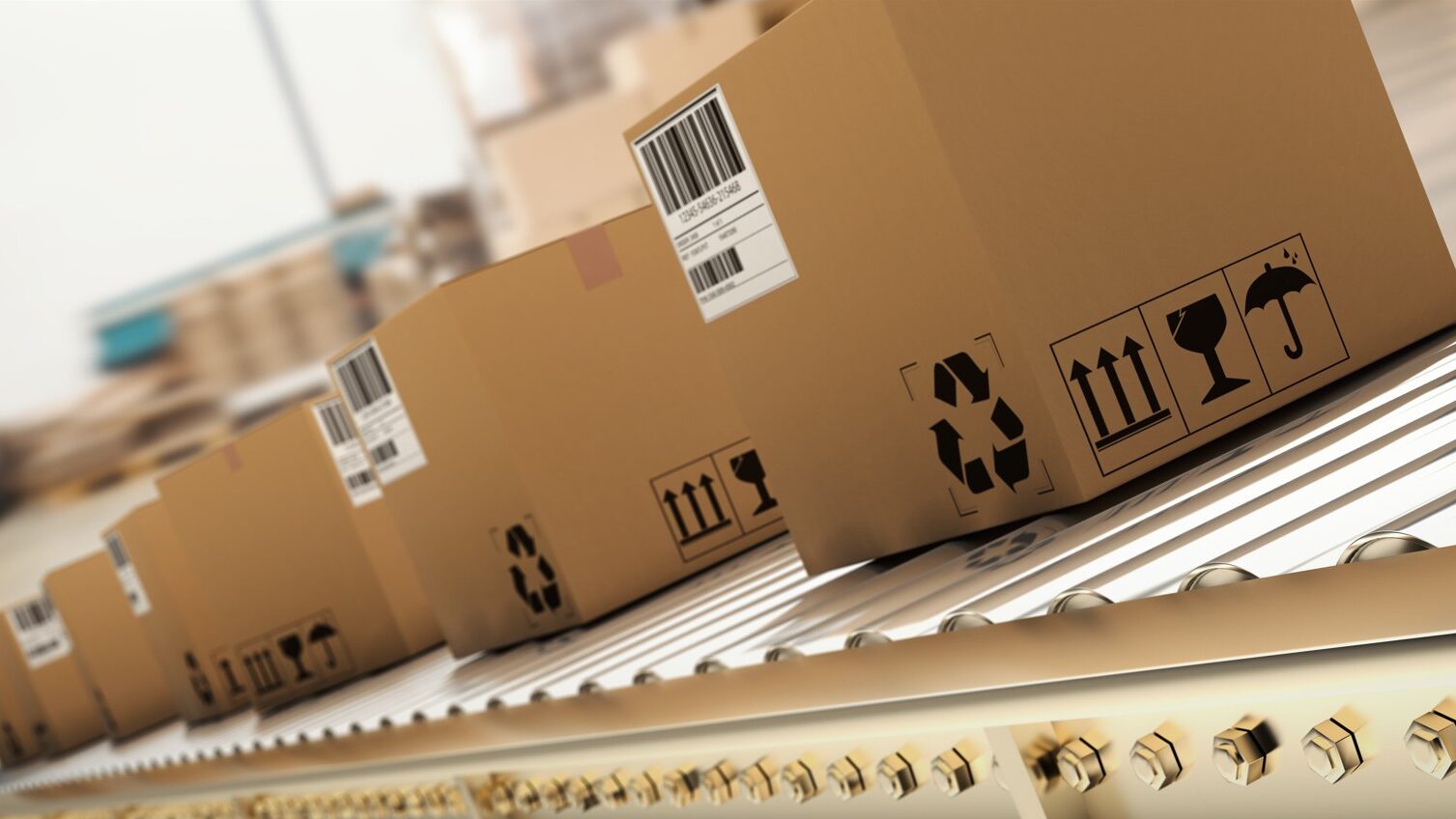
The postal and parcel industry has been facing significant challenges for years. The traditional letter business is drastically shrinking due to ongoing digitalization, while the parcel sector is on a continuous growth trajectory, with expected growth rates of up to 3.5 percent by 2030. An acute shortage of delivery personnel, high shipment volumes in some areas, and heavy traffic density in urban regions are also leading to massive delivery delays. In the first half of 2025 alone, complaints to the Federal Network Agency increased by 13.4 percent compared to the previous year. At the same time, logistics companies are under pressure to reduce their CO2 emissions and waste through the use of e-mobility and sustainable packaging. It cannot be denied: The static planning concepts and data silos that still exist in the postal and parcel industry have reached their limits. To increase efficiency, sustainability, and speed—especially on the last mile—postal and parcel service providers must rethink their logistics. Through AI-supported processes and a seamless flow of information, it is possible to transform traditional, rigid workflows into dynamic, intelligent systems that meet the demand for higher efficiency and sustainability.
Flexible Planning and Execution Architecture To adapt dynamically to market changes, logistics service providers need a flexible planning and execution architecture that breaks down supply chain systems from the first to the last mile into individual, modular components. Each module—from procurement/production to delivery—takes on a specific role and communicates directly with another data service. Instead of transmitting data throughout the entire system and across many intermediate stations, for example, the „Supplier“ service communicates directly with the „Producer“ service, thereby increasing response times. The modularity creates a connected ecosystem that synchronizes the logistical systems with digital real-time information and improves planning and control across the entire supply chain. This allows companies to respond very quickly to market changes, implement tailored solutions for partial routes, and reduce complexity.
Framework Tour Planning Improves Utilization With dynamic fleet and driver management, logistics planners can immediately adjust their routes in the first and last mile to traffic jams, delays, or last-minute returns. For regular, recurring freight orders, a so-called „framework tour planning“ is recommended, which captures only the basic, fixed route structures (the „skeleton“) and thus simplifies planning. Dispatching is no longer based on addresses or orders but on geographical considerations. An algorithm calculates the optimized route along a central line based on defined criteria—such as speed and low fuel consumption—as a sequence of stops, with the „skeleton“ capturing only areas or main stops that the driver should visit. The specific daily assignments are then variably inserted by the dispatchers. In this way, logistics companies can not only reduce their empty runs but also improve the utilization of spaces and vehicles. Throughout the entire transport process, integrated real-time driver apps continuously transmit GPS data, allowing drivers to accurately inform their fleet managers, dispatchers, and end customers about arrival times, delays, or route changes.
Service Level KPIs Define Delivery For the main run, the system forecasts the required quantities based on historical data and seasonal trends. It also matches network capacity with the processing speed of the hubs and ensures that the hub has enough „power“ to process incoming data streams in real-time to avoid bottlenecks. Deliveries are planned by the fleet and driver management based on service level KPIs and considering the throughput capacity of a hub or depot, for example, a maximum of one hundred packages per hour. In this way, fleet managers can create cost-oriented linehaul planning between hubs, depots, and terminals. A management system continuously monitors the transports, taking into account weather, truck availability, or traffic peaks.
Transforming the „Bottleneck“ Traffic Areas into an Ordered Process Finally, yard logistics controls all activities on the factory premises through a digital management system and transforms the chaotic „bottleneck“ traffic areas into an ordered process with minimal throughput times and maximum utilization. An integrated time slot management system blocks corresponding time windows for deliveries and pickups, thereby coordinating vehicle flow and the corresponding capacity utilization of the ramps. AI-supported camera systems capture truck movements, containers, and trailers on the premises in real-time, which not only accelerates processes but also increases safety. The also AI-based route planning visualizes parking spaces, trailers, and trucks on the site. It plans routes, gate assignments, and maneuvering in real-time and automatically allocates loading ramps.
Future Viability Requires Intelligent Orchestration In an era where a delivery person delivers 180 to 200 packages daily and the parcel record stands at 12.4 million shipments per day, traditional logistical processes are no longer sufficient. To manage the increasing parcel volumes, a sophisticated orchestration is required that automates and coordinates processes. Postal and parcel services can only be future-proof if they are connected, flexible, and intelligent, forming a complex interplay of transport modes, digital control levels, and dynamic processes.
 The Author As Head of Operations & Go-To-Market, Robert Recknagel is responsible for sales, implementation, content development, and strategic product development in logistics and manufacturing at Blue Yonder. He advises companies in these sectors on the selection and implementation of IT solutions at the strategic, tactical, and operational planning levels.
Robert Recknagel holds a degree in Service Administration Management from the University of Trier and began his career as a Solution Consultant in Europe and Southeast Asia. He then implemented international logistics concepts for the automotive, manufacturing, and retail sectors at Rhenus Logistics, laying the foundation for the logistics provider’s 4PL business.