
EPG as Leading Challenger in the new Gartner® Magic Quadrant™
May 5, 2026 at 11:30 AM
Shippeo acquires Logward
May 5, 2026 at 1:51 PM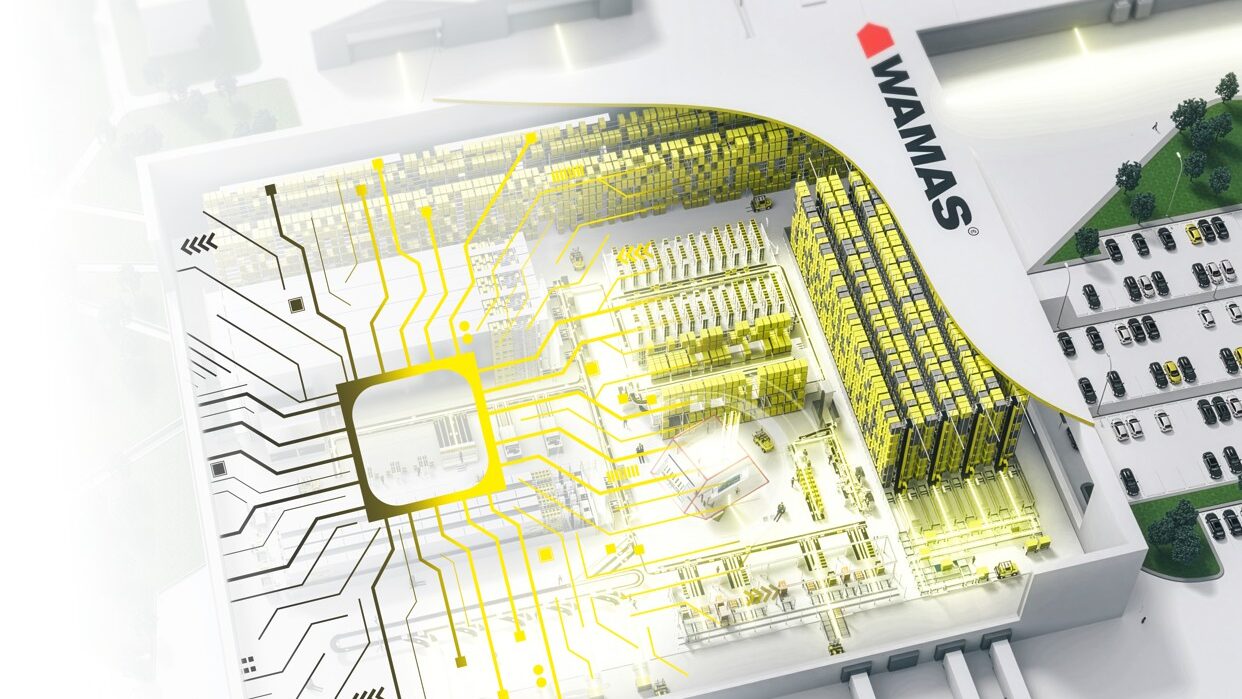
Simulation and emulation are central digital methods in modern intralogistics that significantly contribute to planning security and the reduction of project durations. These technologies are particularly important as simple calculations often do not suffice to design complex warehouse solutions economically. Adjustments during the setup of a warehouse can be associated with high costs and delays.
Effective Planning through Digital Models
Simulation and emulation models provide warehouse operators with the opportunity to virtually test and compare various warehouse concepts, processes, and scenarios. This enables informed decisions about the best warehouse solution and accelerates commissioning. During the planning phase, simulation serves as a central tool. Material flow simulations are used both in the form of generic models for early concept validations and as detailed models for precise layout analyses. The focus is on critical scenarios to identify bottlenecks early and adjust layout and software strategies accordingly.
A fundamental step in any project is the precise analysis of the logistical requirements of customers. Here, item master and order data are examined, and key figures for material flow and the design of storage areas are calculated. The projected business development is also included in this analysis. The results are interactively visualized through the graphical platform „LogiVision,“ creating a unified information status and enabling transparent decisions.
From Planning to Realization
The insights from the data analysis are transferred into a layout, based on which simulation models are created. These models can be generic for quick concept checks or detailed for exact analyses. With the Concept Simulation solution developed by SSI Schäfer, interactions between storage areas are observed over several months. This allows for an early assessment of the sizing of storage areas, taking into account specific replenishment strategies.
Emulation, on the other hand, is used in the realization phase. Here, the real WAMAS Warehouse Management System (WMS) and WAMAS Material Flow System (MFS) software are tested against an emulated facility. Since the simulation already considers WAMAS strategies, the transition to emulation is seamless. Item master, order, and initial inventory data from the simulation are transferred to the emulation.
This approach directly transfers the planning data basis into realization to align WAMAS strategies specifically with customer requirements. During the ramp-up of the facility, new customer data from the ERP system is continuously integrated.
The early software end-to-end tests, ranging from goods receipt to goods dispatch, reduce integration risks and ensure the functionality of the systems. This enables a rapid commissioning with as few iteration loops as possible and contributes to the quality of the project as well as adherence to deadlines.