
Xplanis Becomes Consortium Partner for the LAE Transport Price Index
Jul 7, 2024 at 10:04 AM
Deutsche Post generally welcomes the new Postal Act
Jul 7, 2024 at 10:33 AM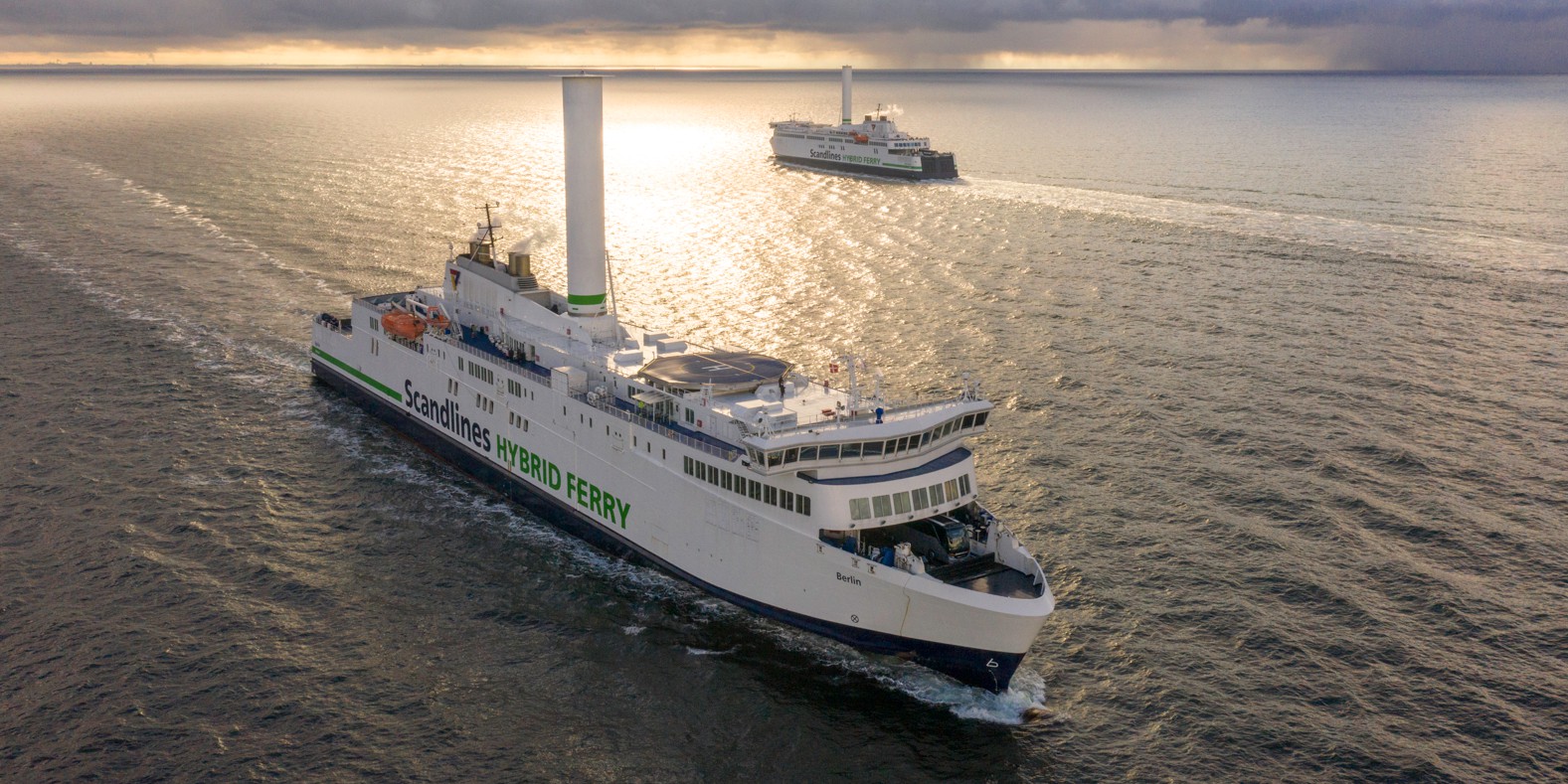
After a slight but persistently negative trend in the freight sector triggered by geopolitical factors, the horizon for Scandlines is now brightening. For the first half of 2024, Scandlines is seeing an average growth of 5 percent in truck traffic compared to the previous year on the Rostock-Gedser route. The effects of the weak economy, particularly in Germany and Sweden, are still noticeable.
However, there are timid signs of an economic improvement in Denmark, Sweden, and the Benelux countries. This aligns with Scandlines’ expectations of a slow recovery in the second half of 2024. Similarly positive developments are observed in the bus transport sector on Rostock-Gedser, as the volume has also increased by 5 percent in the first six months of 2024 compared to 2023. The desire to undertake group trips abroad has gradually returned.
“With these encouraging developments, we look forward to the main season we are currently in with great optimism. With the start of the summer school holidays in Denmark, car traffic is significantly increasing this week. During the first six months of this year, slightly fewer cars than last year used Scandlines’ ferry services, but the advance booking numbers for the summer season on both routes of the shipping company are promising,” says Heiko Kähler, Managing Director of Scandlines Deutschland GmbH.
At Scandlines, however, traffic volume is not the only decisive measure. The focus remains on efforts to realize the vision of a ferry operation without direct emissions. The zero-emission operation on the Vogelfluglinie between Puttgarden and Rødby is expected to become a reality by 2030. As part of the sustainability report, Scandlines has committed to operating without direct emissions by 2040. Achieving these ambitious goals requires significant investments, ranging from rotor sails and propeller optimizations on the Rostock-Gedser route to the commissioning of Scandlines’ first fully electric cargo ferry, the “Futura,” in 2024. Since 2013, Scandlines has invested a total of 400 million euros in measures that bring these goals closer step by step. By 2030, Scandlines already expects a reduction in CO2 emissions of 60 percent compared to 2008.
Economic Interests and Sustainability Go Hand in Hand
“For us, economic interests and the implementation of our sustainability goals go hand in hand. Only on the basis of stable results and positive business developments can we implement our Green Agenda and offer our customers a CO2-efficient transport route between Germany and Scandinavia,” says Heiko Kähler.
Photo: © Scandlines