

First woman at the top of Bavarian freight forwarders
Jul 7, 2026 at 10:00 AM
More money for German transport infrastructure
Jul 7, 2026 at 11:50 AM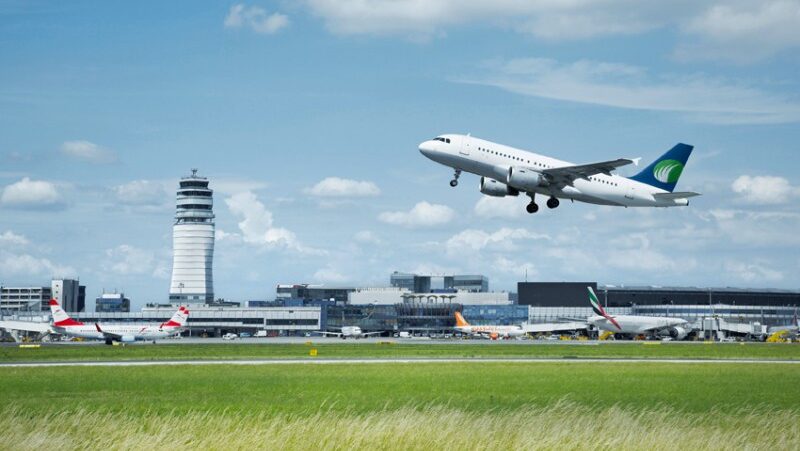
The National Council has approved comprehensive changes to the Aviation Act and the Motor Vehicle Act. The amendments were passed with the votes of the ÖVP, SPÖ, and NEOS, while the Freedom Party and the Greens expressed critical voices. Transport Minister Peter Hanke described the legislative changes as a significant step towards modernizing aviation.
Changes to the Aviation Act
A central point of the amendment to the Aviation Act is adjustments to the reliability checks for employees in security-relevant areas. These checks are intended to better ensure data protection and legal protection in the event of negative results. Additionally, the term „unreliability“ will be defined more precisely. An amendment proposed by the coalition brought further clarifications regarding the operation of airports and the construction of non-aviation buildings. The insurance obligation for drones has also been regulated, and a document database will be established to verify the authenticity of documents.
The opposition, represented by the FPÖ and the Greens, expressed concerns regarding the amendment. Gerhard Deimek (FPÖ) criticized the vague definition of „close relationships“ with criminal groups and lamented the imprecise requirements for drone insurance. A resolution proposed by the Greens, which called for better protection against aircraft noise for residents of the Vienna airport region, was rejected by the other factions.
Innovations in the Motor Vehicle Act
The amendment to the Motor Vehicle Act introduces longer intervals for the periodic inspection of cars and motorcycles. Instead of the previous 3:2:1 rule, a 4:2:2:2:1 rule will apply in the future. These changes are also expected to simplify administration regarding vehicle inspections and driving schools. Furthermore, regulations for test drives with automated vehicles have been introduced.
The Greens criticized the deregulation and warned of potential safety risks due to longer inspection intervals. Elisabeth Götze expressed concerns that serious defects in vehicles might not be detected in time. The FPÖ agreed to the amendment despite minor concerns, while the NEOS described the changes as steps in the right direction.
Transport Minister Hanke emphasized that the amendment to the Motor Vehicle Act would be modernized without compromising traffic safety. Workshops would be relieved of unnecessary documentation obligations, and the legal framework for the test operation of automated vehicles would be established.