

Gebrüder Weiss with Logistics Solution for Spirits in China
Aug 8, 2024 at 4:44 PM
Robust Business Development at Jungheinrich
Aug 11, 2024 at 9:16 AM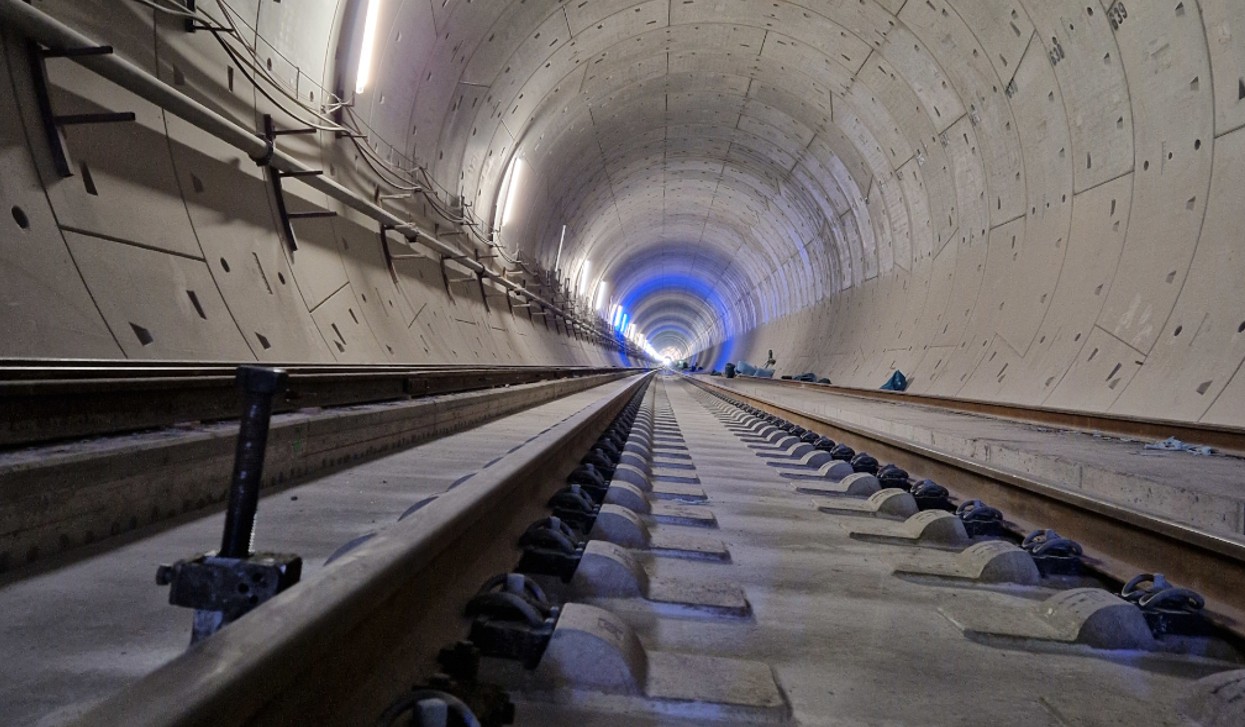
On August 12, 2024, the Rastatt tunnel disaster will mark its seventh anniversary, during which one of the tunnel tubes collapsed just before the structural completion of the entire railway tunnel. Almost simultaneously with the anniversary, the Rhine Valley Railway will be completely closed for three weeks due to construction work on the tunnel. Unlike the complete closure that lasted seven weeks immediately after the accident in 2017, which affected the heavily trafficked route, this upcoming closure has been planned long-term and includes a diversion concept for parts of the rail freight traffic on the left bank of the Rhine via French routes.
(Berlin/Rastatt) Concurrently with the Riedbahn, another section of the most important freight railway corridor in Germany – along the Rhine – will be closed for three weeks starting Friday. The disruptions for travelers and industrial shippers date back to a still mysterious construction site accident on an August Saturday seven years ago. To transport goods between the North Sea ports, the most important industrial regions in western Germany, Switzerland, and the metropolitan areas of northern Italy, freight railways must pass through the Rhine Valley Railway. Up to 250 trains operate there daily in passenger and freight traffic. GÜTERBAHNEN Managing Director Peter Westenberger summarizes the capacity problem: “The designated European rail freight corridor Rhine-Alpine has only two instead of the necessary four tracks over long stretches in the Baden Rhine Valley. And the long-announced expansion is progressing at a snail’s pace.” The collapse of the Rastatt tunnel just before the end of the drilling work delays the removal of the last bottleneck between Karlsruhe and Offenburg by many years, and according to DB, until at least the end of 2026.
Detour via France
After the tunnel boring machine “Wilhelmine,” which was hastily cemented in 2017, has already been partially removed from the tunnel, another step in the tunnel reconstruction marathon can be taken in the right direction: the connection of the southern tunnel end to the railway network. With a three-week closure (from August 9 to August 30) of the Rhine Valley Railway between Rastatt and Baden-Baden, DB InfraGO aims to achieve this milestone. Unlike the unexpectedly necessary closure of the Rhine Valley Railway in 2017, there is a diversion concept for the complete closure starting Friday that not only considers rail freight traffic but also includes a dedicated left-bank detour for up to 37 freight trains daily via France to bypass the closed section. “The diversion via France that we already demanded after the accident is now finally coming and can prevent damages in the millions for freight railway companies,” praises Westenberger the improved diversion concept.
Hope for a functioning diversion concept
Diesel shuttle trains enable the operation of the non-electrified route Wörth – Lauterbourg – Strasbourg, with hybrid or diesel locomotives pulling the otherwise electrically operated freight trains. This way, the Rastatt closure can be bypassed by up to 582 freight trains. “A smooth functioning of the diversion concept would relieve the rail freight traffic, which is currently heavily burdened by the complete closure of the Riedbahn and now also by the Rastatt tunnel reconstruction marathon and is tired of the continuous marathon running. We hope that the theoretically well-planned diversion concept will also work in practice,” says Westenberger.
No clarification of the cause of the collapse yet
It is extremely disturbing for Westenberger that there is still no conclusive clarification of the cause of the collapse at the Rastatt tunnel construction site. “DB InfraGO, the involved construction companies, and the Federal Railway Authority are keeping silent. This raises legitimate concerns on our part that the additional costs incurred will ultimately not be borne by the perpetrator of the accident but by the federal government. And whether the right consequences have been drawn for other tunnel projects is also not a trivial matter,” criticizes Westenberger the opaque flow of information even seven years after the accident.
Photo: © Deutsche Bahn / Image caption: Image from the construction site in the Rastatt tunnel