

Chancellor Friedrich Merz visits Akkermann Transporte
May 1, 2026 at 3:18 PM
SGKV publishes statistical report 2025 for members
May 1, 2026 at 3:42 PM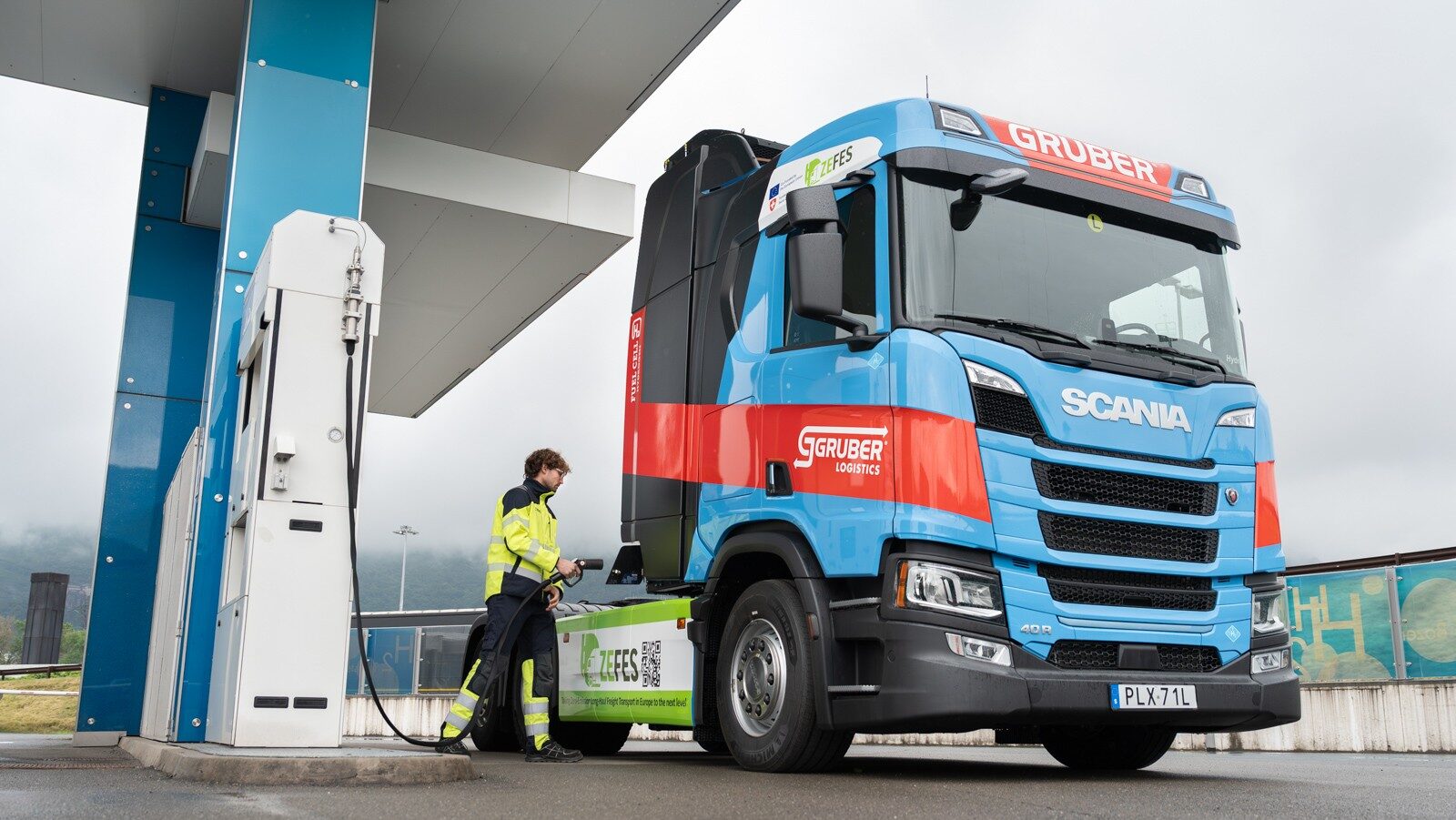
The partnership between Gruber Logistics and Scania is taking concrete shape this spring. Starting in May 2026, a hydrogen-powered heavy-duty vehicle of the Scania 40R model will be tested under real operating conditions in Italy. This practical test is part of the European ZEFES project, which focuses on the decarbonization of freight transport.
Hydrogen as a Focus of Drive Technology
In recent years, Scania has increasingly concentrated on the electrification of road freight transport, but it also aims to explore various sustainable drive technologies. The testing of hydrogen-powered vehicles is currently in an early phase, with a focus on pilot projects in Europe. The collaboration with Gruber Logistics aims to position Italy as a pioneer in the development and testing of hydrogen solutions for heavy-duty transport.
The ZEFES project aims to accelerate the introduction of battery electric vehicles (BEV) and hydrogen fuel cell vehicles (FCEV) in European freight transport. Martin Gruber, CEO of Gruber Logistics, emphasizes the importance of the test: “It is important to highlight that this vehicle, although not yet in series production, is being used in real operations thanks to collaboration with leading companies from the manufacturing sector. This is a significant step to accelerate the introduction of new technologies and to immediately recognize the potential challenges a logistics company might face when implementing them.”
Technical Details of the FCEV Vehicle
The hydrogen-powered vehicle is based on a three-axle tractor unit developed on a BEV platform. This platform integrates hydrogen tanks and a fuel cell system. Hydrogen is not burned but converted into electricity via the fuel cell. The aim of the test is to evaluate operational performance, range, and refueling methods under real conditions.
Compared to conventional BEVs, an FCEV offers several advantages. These include a greater range, as the fuel cell system allows for longer distances, as well as shorter refueling times of about 20 minutes. Additionally, hydrogen distribution and refueling networks can be more easily decentralized in certain logistics processes, making them suitable for complex applications.
Simone Martinelli, Sales Manager E-Mobility at Scania Italy, explains: “Building on Scania’s typical modular approach, we have utilized the BEV platform and combined it with fuel cell technology. This is not a vehicle optimized in its final configuration, but rather a transitional solution that allows us to leverage developments in electric powertrains and assess the behavior of the fuel cell system under real conditions.”
Planned Events and Tests
In addition to practical tests on the road, refueling tests as well as static and dynamic demonstrations are planned. The results and best practices will be shared with the industry. The first joint event will take place at Transpotec 2026, where Scania and Gruber Logistics will present their initiative on May 14 at 12:00 PM. Visitors can view the vehicle in the outdoor area during the fair. Furthermore, the vehicle will also be showcased at the Gruber Logistics Innovation Summit on May 27 at the Safety Park in Bolzano and on May 28 at the NOI Techpark in Bolzano.