


Honold builds logistics center for Airbus
May 19, 2026 at 1:25 PM
EMPL hands over E-trucks to SPAR Austria
May 19, 2026 at 2:54 PM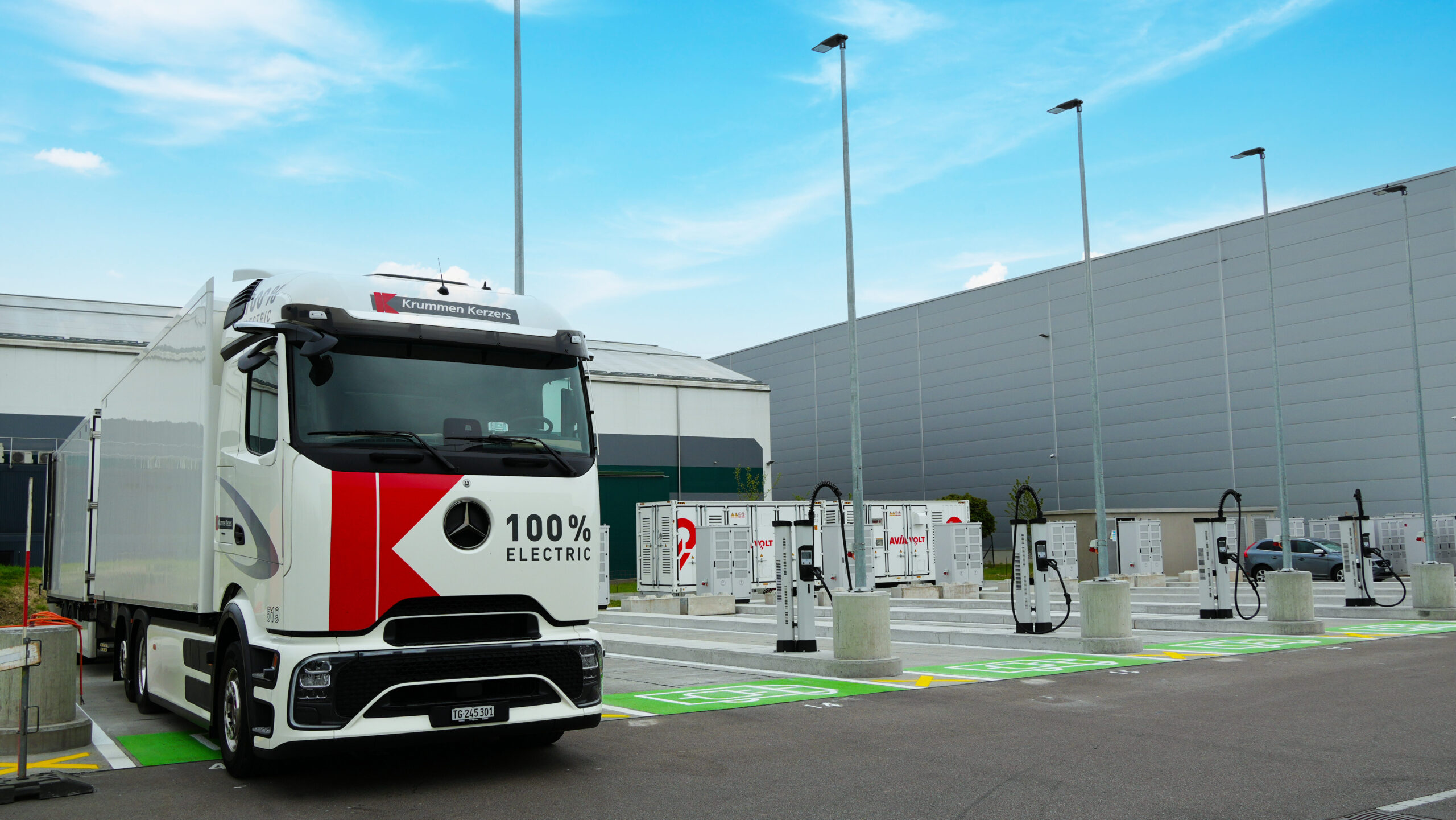
Lidl Switzerland has recently completed the construction of a new e-charging station at the distribution center in Weinfelden, located in the canton of Thurgau. Since May 1, 2026, a total of twelve charging points have been available, allowing twelve electric vehicles to be charged simultaneously. This investment of 6.5 million CHF is part of the company’s strategy to make store deliveries fossil-free by 2030.
Expansion of charging infrastructure
The new charging infrastructure in Weinfelden is designed to enhance the efficiency of the discounter’s logistical operations. With a charging capacity of 400 kW per charging point, a truck can be fully charged in about 90 minutes. Additionally, another twelve charging points are planned, which are expected to be operational by September 2026. This would increase the simultaneous charging capacity to up to 24 vehicles.
Daniel Stolz, Head of Transport Logistics at Lidl Switzerland, emphasizes the importance of a powerful infrastructure for the sustainable delivery of stores: “In order for fresh food to sustainably reach our stores, a robust infrastructure is needed behind the scenes. With the expansion in Weinfelden and Sévaz, we are creating the conditions to operate our truck fleet more ecologically without sacrificing efficiency.”
Technology-open approach to electrification
Lidl Switzerland is pursuing a technology-open approach to logistics transformation. To achieve the goal of fossil-free store deliveries by 2030, the company is relying on various drive forms. The new charging park in Weinfelden lays the foundation for the electrification of the vehicle fleet and helps to gradually reduce dependence on fossil fuels.
In addition to the charging infrastructure, the energy supply of the new charging park is also focused on sustainability. The electricity supply is largely generated through self-production via photovoltaic systems on the roofs of the buildings. Additionally, certified green electricity from the grid is used to ensure that the operation of electric vehicles is resource-efficient.