
Eberhard Extends Partnership with SBB Cargo Switzerland
Jun 26, 2026 at 2:21 PM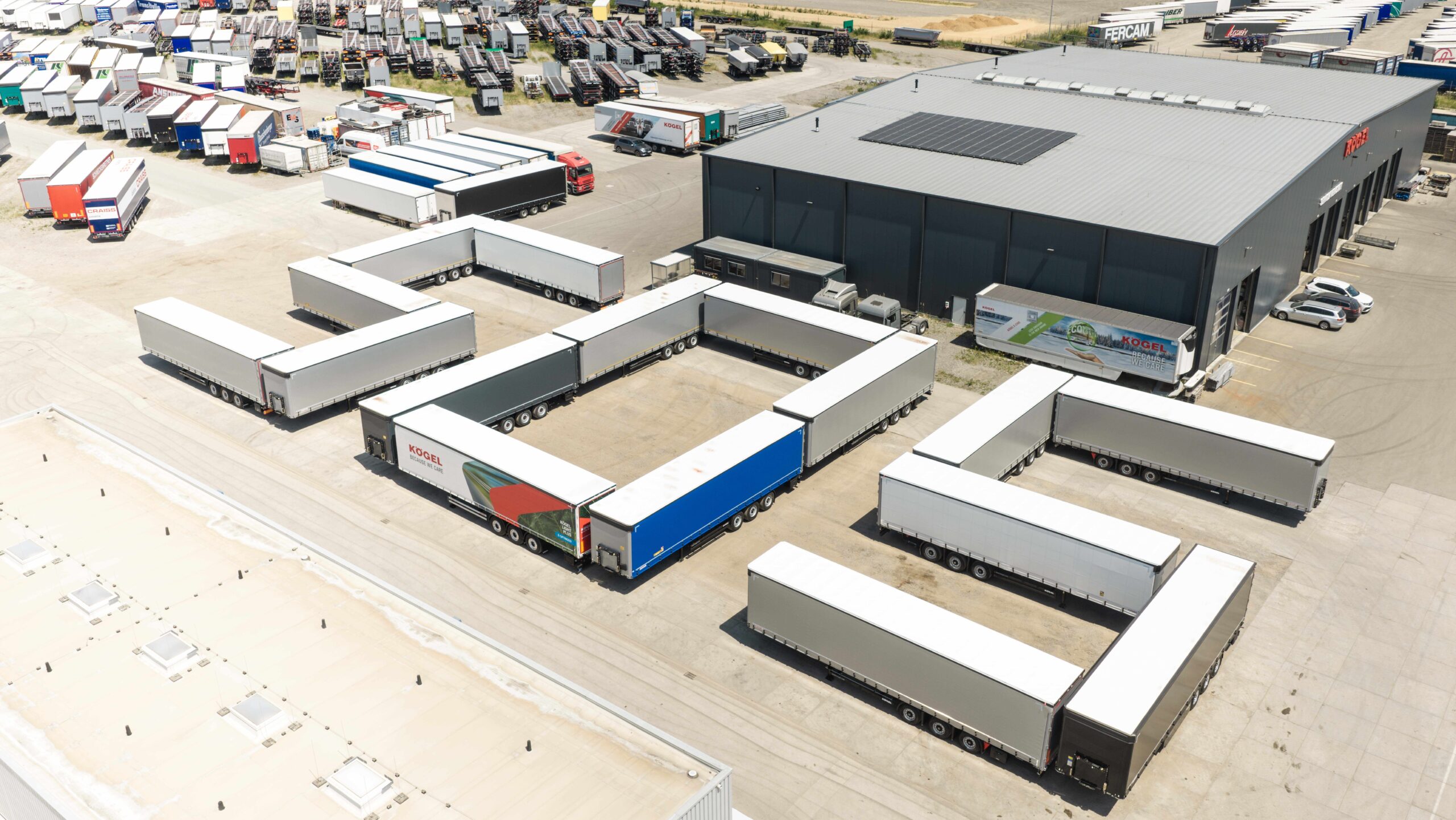
Kögel draws attention to the impact of the EU regulation on VECTO for the transport industry with a high-profile SOS campaign in Burtenbach. The event was also attended by Bavaria’s Deputy Prime Minister Hubert Aiwanger, who supports the trailer manufacturer’s demand for technically achievable CO₂ targets to secure jobs, industrial value creation, and the competitiveness of Germany as a location.
VECTO (Vehicle Energy Consumption Calculation Tool) is a calculation model of the European Union that assigns a virtual CO₂ value to trailers. The basis is Regulation (EU) 2024/1610, which stipulates that this simulated value must decrease by 10% for semi-trailers and by 7.5% for trailers by 2030.
From the industry’s perspective, this creates a fundamental problem: trailers do not have their own propulsion and do not directly cause CO₂ emissions. The assessment is based on a simulation rather than on actual measured emissions during operation. It ignores physical limits and the real transport task.
Possible consequences: Penalties, higher vehicle prices, and job losses
According to Kögel and all leading European trailer manufacturers, the required reduction targets are not achievable with the currently available technical means. This could result in penalties of up to 64 million euros per year for the company. To absorb this burden, trailer prices could rise by up to 50 percent. The consequences would then be felt throughout the entire supply chain—from transport companies to end consumers. The industry-wide impact is significantly larger: approximately 70,000 jobs in the European trailer industry are affected by the consequences of the current regulation.
Investments at the Burtenbach location at risk
In recent years, Kögel has invested several million euros in the Burtenbach location. This includes the production line for a new refrigerated vehicle and the expansion of the factory premises for an additional production hall. These investments and the long-term development of the site are jeopardized by the economic consequences of the VECTO regulation.
Bavaria’s Deputy Prime Minister, Hubert Aiwanger, has a clear opinion on this: „The last thing the trailer and logistics industry needs in these times is additional burdens from unrealistic and excessive regulations from Brussels. Our companies must not be unduly burdened. The medium-sized companies in the industry do not have unlimited financial or technological resources to cushion nonsensical regulatory burdens in the short term. For them, the EU requirements for CO₂ savings through trailers represent an acute threat to their economic existence—with direct consequences for thousands of jobs. Instead of looming penalties, we need pragmatic and realistic solutions that bring real CO₂ savings.“
Eight manufacturers sue against the EU regulation
Eight European trailer manufacturers have filed a lawsuit against the VECTO regulation. The aim is to revise the regulation in its current form. The lawsuit is not against climate protection but against requirements that they believe are unimplementable. „We have already done a lot for this,“ says Markus Siegner, CEO of Kögel Trailer GmbH. „Our durable lightweight vehicles have been contributing to reducing fuel consumption and thus CO₂ emissions in transport for years. The current VECTO regulation ignores the reality of the transport industry and puts companies like Kögel under massive pressure. We need pragmatic solutions that unite climate protection and competitiveness.“
Appeal for realistic climate targets
With the symbolic SOS campaign in Burtenbach, Kögel calls for a review of the VECTO regulation. The support from State Minister Hubert Aiwanger and the lawsuit from the eight manufacturers demonstrate, in the company’s view, the need for action. Kögel remains committed to sustainability, climate-friendly transport solutions, and innovation. However, this requires regulatory requirements that are technically feasible and economically viable.