

Maximilian Lais takes over Roadfreight Cluster CH/A at Hellmann
Apr 21, 2026 at 8:26 AM
T Comm Telematics introduces new battery charger for refrigerated transport
Apr 21, 2026 at 9:15 AM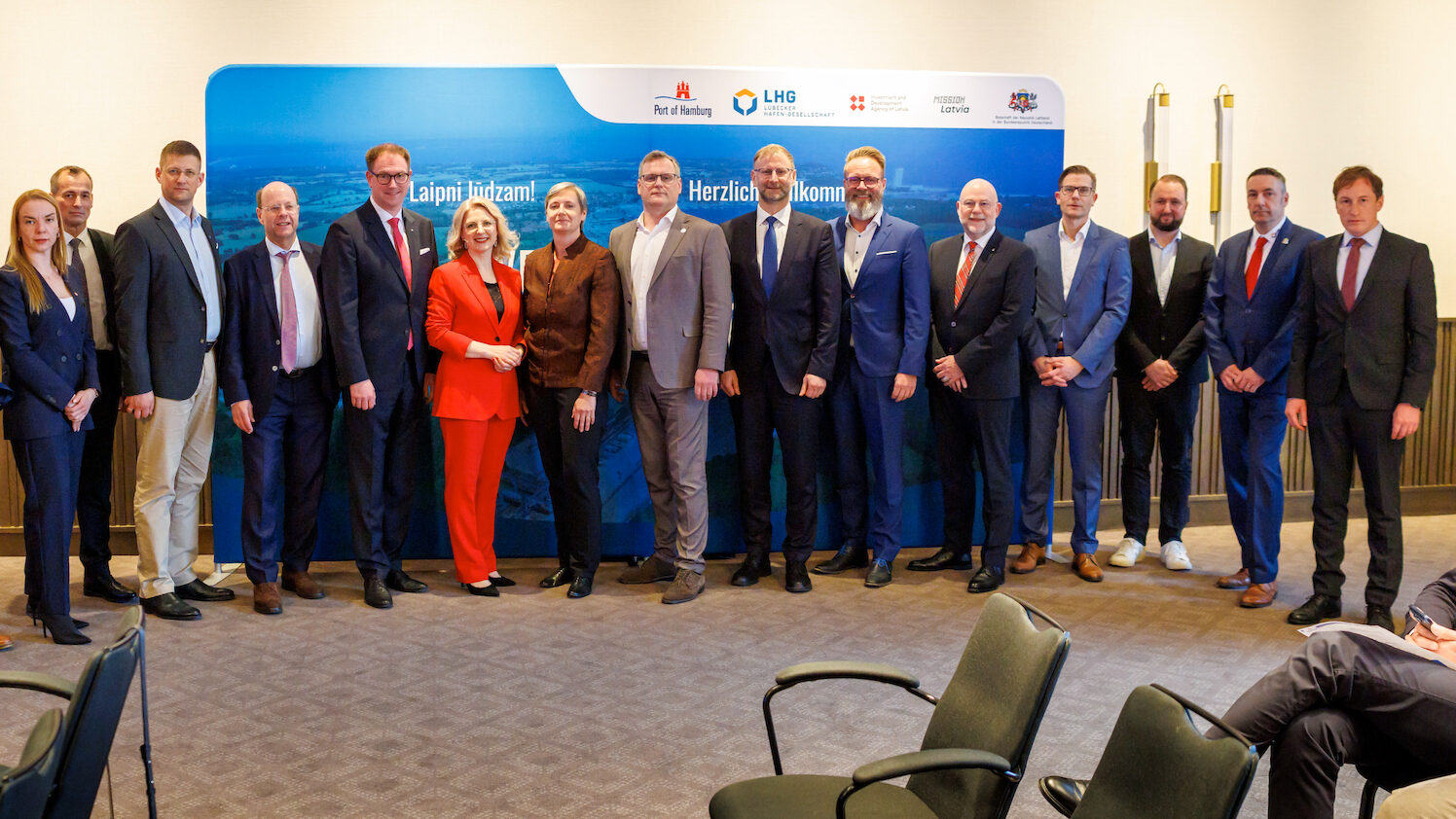
Representatives from ports, business, and politics emphasized the security in the Baltic Sea as a crucial factor for stable supply chains and Europe’s strategic capability at the German-Latvian Port Forum in Lübeck. Around 100 participants discussed the openness of sea routes, the protection of critical infrastructure, and the further development of resilient corridors in the Baltic Sea region.
Security as a Key Factor
The security in the Baltic Sea is viewed by participants as a central challenge for ports and supply chains. Dr. Andreas Fahrner, Head of Evaluation at the Federal Intelligence Service (BND), stressed the necessity of keeping the Baltic Sea and its ports open. He warned of the dangers posed by closed maritime routes and pointed to the high number of cyberattacks on critical infrastructure as well as hybrid threats. These developments require geopolitical resilience to ensure the security of sea routes.
Prof. Dr. Sebastian Jürgens, Managing Director of Lübecker Hafen-Gesellschaft (LHG), highlighted the importance of the Latvian-German Port Day. He emphasized that cooperation with partners in the Baltic Sea region is crucial for the further development of the corridors. It is important to consider not only the needs of shippers but also those of the defense industry and the energy sector.
Strengthening Cooperation in the Baltic Sea Region
Ansis Zeltiņš, CEO of the Freeport of Riga Authority and Chairman of the European Sea Ports Organisation (ESPO), underscored the necessity of close partnerships between ports. He emphasized that long-term reliability and connectivity to other ports and customers are essential for securing supply and supply chains. “Ports should think less in terms of competition with each other and act together,” said Zeltiņš.
Claus Ruhe Madsen, Minister for Economic Affairs, Transport, Labor, Technology, and Tourism in Schleswig-Holstein, and Lübeck’s Mayor Jan Lindenau pointed out that ports today are more than just transshipment points. They must remain operational as part of critical infrastructure, even under pressure. This requires robust connections to rail and road as well as close cooperation with shipping companies, customers, and authorities.
Axel Mattern, Board Member of Port of Hamburg Marketing, called for clear political support for the ports. He emphasized that resilience is ultimately a matter of funding and that investments must be made in infrastructure and ports. Given the growing demands on hinterland connections and the strategic importance of the ports, it is essential for the federal government to pay more attention to these issues.
The German-Latvian Port Forum thus sent a clear signal: To strengthen supply security, resilient supply chains, and strategic capability in Europe, it is necessary to keep the Baltic Sea open, make the ports resilient, and invest in infrastructure and cooperation.