


Goldhofer opens production facility in Hickory
Jul 15, 2026 at 8:25 AM
Asian rush for German logistics properties
Jul 15, 2026 at 10:00 AM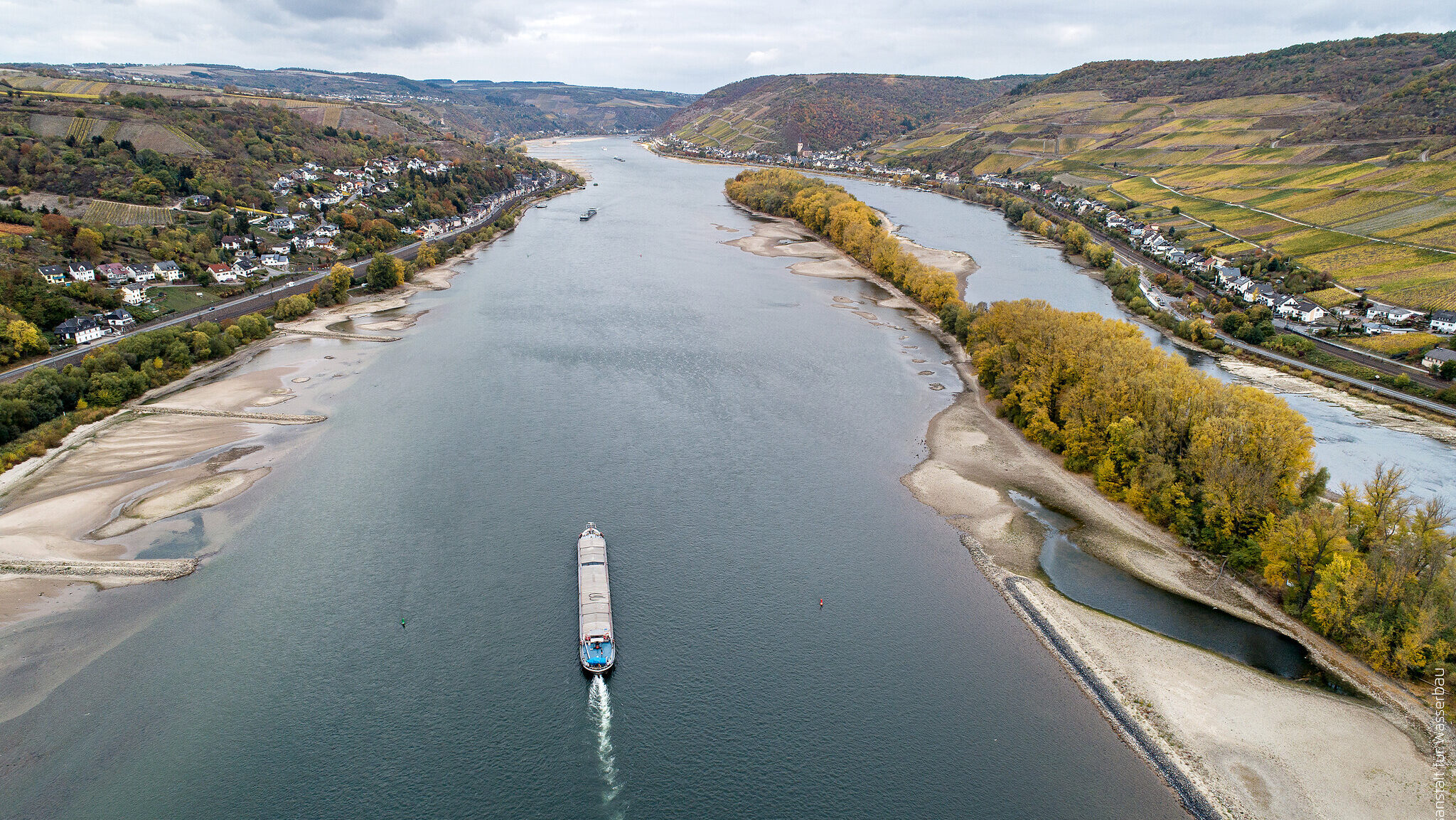
Germany’s Federal Minister for the Environment Carsten Schneider and Dirk Schwardmann, President of the Federal Waterways Engineering and Research Institute, have introduced a new internet portal named NIWIS. This portal provides comprehensive information on low water levels in Germany and is intended to be a valuable addition to the existing electronic waterways information service ELWIS of the Federal Waterways and Shipping Administration (WSV).
Comprehensive information for various user groups
Jens Schwanen, Managing Director of the Federal Association of German Inland Navigation (BDB), expressed positive views on the launch of NIWIS. He emphasized that the portal is significant not only for shipping and its customers but also for municipalities and the general public. NIWIS explains interconnections, provides current data, and offers important links to water levels as well as multi-week forecasts of water levels. Particularly, the long-term forecast of water levels is of great importance for planning in shipping, business, and industry. This development is part of the „Action Plan Low Water Rhine,“ a strategy adopted by the Ministries of Transport and Economic Affairs to better manage freight traffic on the Rhine under extreme low water conditions.
In recent weeks, many journalists have posed questions to the BDB regarding low water levels. Currently, low water levels on numerous rivers pose an obstacle to freight and passenger shipping in Germany. Lower water levels lead to shallower navigation channels, which restrict the transport capacity of vessels. This results in logistical challenges and can lead to increased costs and supply shortages.
Regional differences and specific challenges
The impacts of low water levels vary regionally, as illustrated by the graphical representation on NIWIS. While the south and west of Germany are experiencing drought, there have been rainfall in the north. Additionally, there are significant differences between individual rivers and canals. Low water levels primarily occur in free-flowing rivers, such as the Rhine, where water levels cannot be regulated by damming. In dam-regulated rivers like the Moselle, Neckar, or Main, as well as in artificial canals, the water level is stabilized by weirs and locks. In some areas, pumping stations can be used to further stabilize the water level, meaning that low water levels in these bodies of water often occur late or not at all.
The new portal NIWIS thus consolidates important information and forecasts regarding water levels, which are significant for proactive planning in shipping, business, and industry.