
KION increases order intake in Q1 2026
May 1, 2026 at 3:43 PM
Swiss Rhine Ports as a Gateway to Switzerland – Also for Cocaine?
May 4, 2026 at 7:59 AM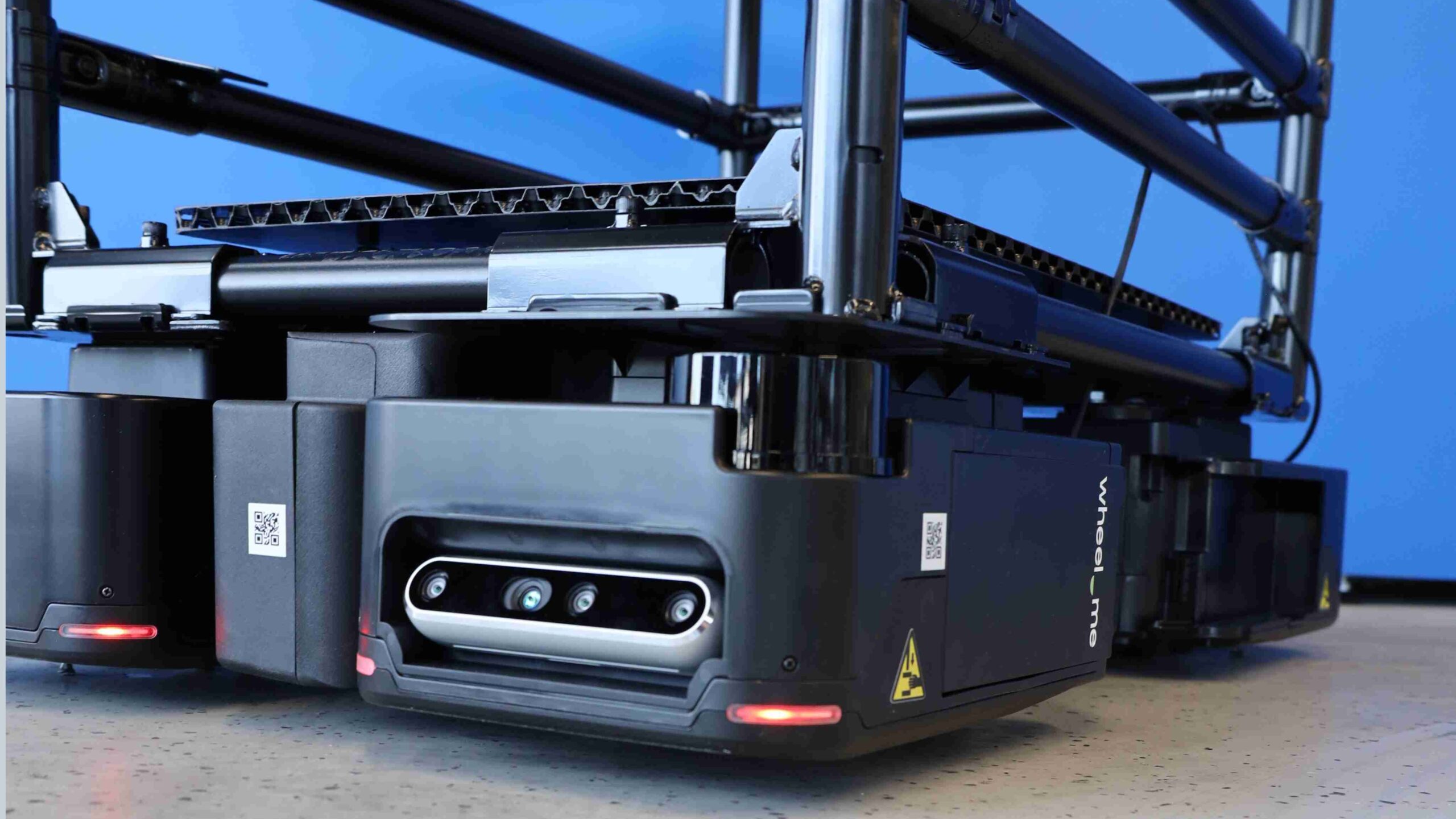
Autonomous Mobile Robots (AMRs) have established themselves as a significant technology in modern intralogistics. They take on transport tasks in warehouse and production environments and operate without fixed pathways. This flexibility fundamentally distinguishes them from Automated Guided Vehicles (AGVs), which operate on predefined routes.
Functionality and Advantages of AMRs
An Autonomous Mobile Robot is a self-navigating transport system that moves freely through buildings. Equipped with sensors such as cameras and laser scanners, it continuously analyzes its environment and can detect obstacles. This technology enables AMRs to calculate alternative routes in real-time when operating conditions change, such as blocked paths or new work areas.
A key advantage of AMRs is that they do not require fixed infrastructure. This allows for rapid integration into existing systems and easy restructuring when requirements change. Companies that frequently adjust their production layouts particularly benefit from this flexibility.
Differences Between AMRs and AGVs
AGVs are driverless transport vehicles that operate on fixed routes defined by magnetic strips, guide lines, or QR codes. In direct comparison, it becomes evident that AGVs work efficiently in stable, consistent processes; however, they require fixed infrastructure and are less adaptable. In contrast, AMRs are designed for dynamic environments and can independently plan new routes, enhancing their flexibility and adaptability.
The differences in navigation and flexibility are crucial. While AGVs are heavily rule-bound, AMRs allow for a more intelligent and adaptable handling of transport tasks.
Benefits for Companies
The implementation of AMRs offers companies several advantages. They provide high flexibility, as they can adapt to changing layouts and processes without requiring structural changes. Additionally, integration occurs quickly, which presents a clear advantage over traditional AGV systems.
Another aspect is operational safety. AMRs detect people and obstacles in real-time and respond automatically, significantly reducing the risk of accidents. Furthermore, they enhance efficiency by taking over transport tasks and relieving employees, leading to smoother and more predictable processes.
The scalability of AMRs is also an important point. Companies can start with a small number of robots and expand their fleet as needed, making the technology particularly future-proof.
Impact on Lean Management and Modern Production
In the context of Lean Management, which focuses on waste reduction, AMRs play a crucial role. They help provide materials as needed, shorten transport routes, or even eliminate them altogether. This leads to smoother and more predictable workflows, increasing efficiency in production.
In summary, Autonomous Mobile Robots represent more than just an evolution of traditional transport techniques. They revolutionize the way materials are moved within companies. With their flexibility, easy integration, and intelligent navigation, they are particularly suited for modern production and logistics systems that must continuously evolve. Compared to AGVs, they offer greater adaptability and open up new opportunities for companies to make their processes more efficient and safer.