

Unilode and Satco open MRO location in Los Angeles
Mar 19, 2026 at 10:20 AM
TX Logistik: Longest corridor is operational
Mar 19, 2026 at 11:53 AM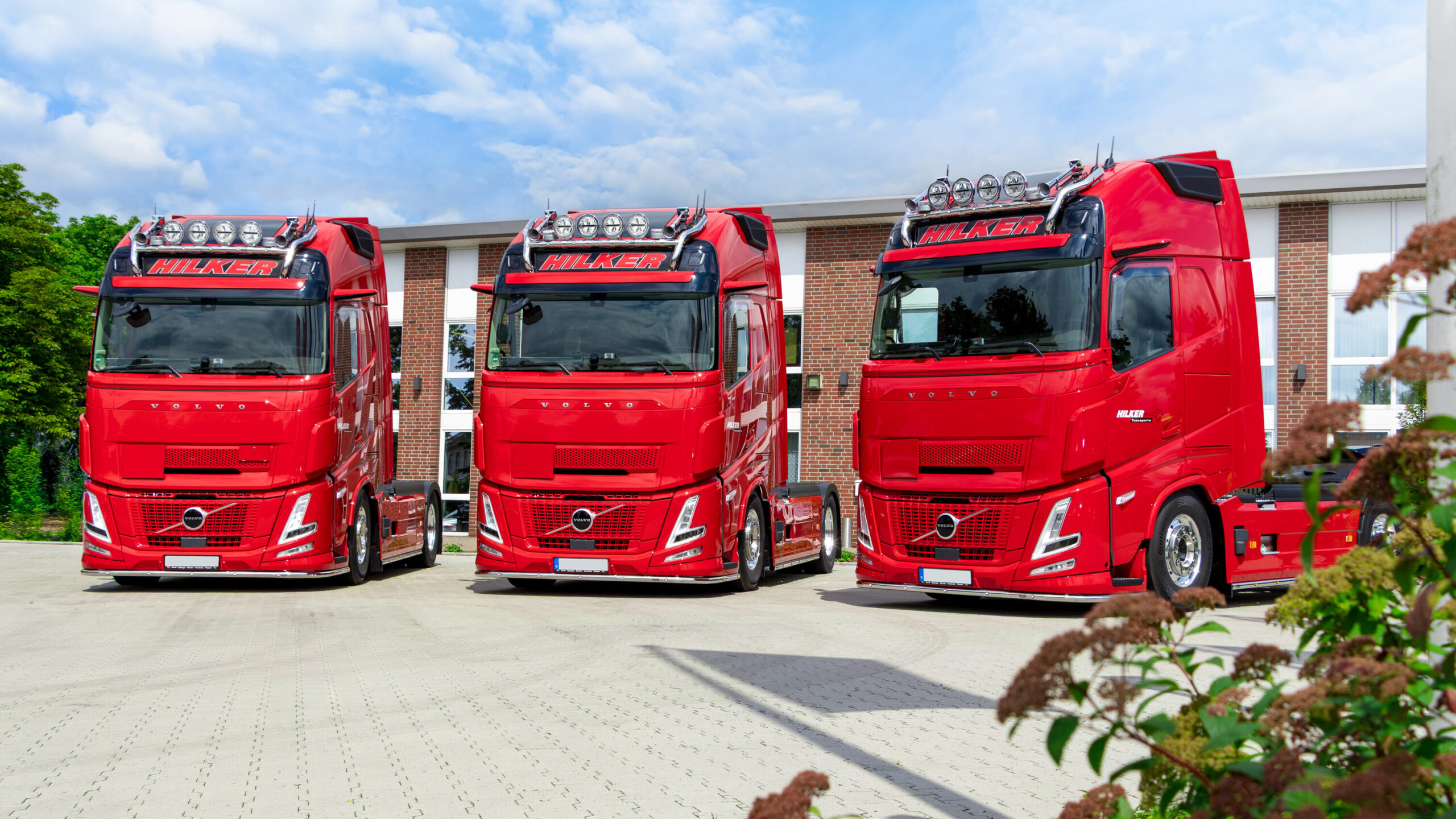
Freight and logistics companies in Germany and Europe are increasingly relying on gas-powered trucks from Volvo Trucks, particularly models that run on bio-LNG. This decision aims to reduce operating costs while significantly lowering CO₂ emissions. Currently, various companies have ordered between 25 and 50 tractor units of the Volvo FH model in the gas-powered variant.
Growing Interest in Bio-LNG
Gregor Frieb, Manager of Business Development at Volvo Trucks Germany, emphasizes that the recent large orders and global sales of over 10,000 gas-powered trucks indicate the establishment of bio-LNG among customers. „Our gas-powered trucks are not a bridging technology. They are here to stay – as a real alternative that allows our customers to immediately reduce CO₂ emissions,“ explains Frieb.
An example of the use of bio-LNG is Hilker GmbH & Co. KG from Friesoythe, Lower Saxony. The family-owned company operates 100 tractor units, including 70 gas-powered and two electric vehicles. In the latest order, 25 LNG vehicles were delivered, while ten more are planned. Stefan Hilker, Managing Partner, highlights the advantages of LNG: „By choosing LNG, and particularly bio-LNG, we are opting for a sustainable fuel that significantly reduces our emissions.“
Cost-Effectiveness and Planning Security
Hilker points out that the costs for LNG have been cheaper compared to diesel in the overall assessment since 2020, despite short-term price increases following the Russian attack on Ukraine. „We see our future in bio-LNG. Here, the cost advantages over diesel fuel become even more pronounced, depending on the usage profile,“ says Hilker.
In Germany, there are around 200 LNG filling stations that offer almost exclusively bio-LNG. Reliable contract models with suppliers create planning security and stable conditions for companies. Various supply models, including fixed-price models and price guarantees, enable operators to better calculate their fuel costs. This structure could also bring long-term cost advantages due to the anticipated classification of Volvo LNG trucks in toll class 3.
The recent orders are part of a comprehensive strategy by Volvo Trucks to increase the acceptance of gas-powered vehicles in heavy long-distance transport. The trucks offer comparable pulling power and range to modern diesel trucks, making them suitable for demanding transport tasks. The efficient engine technology ensures economical fuel consumption and longer maintenance intervals, which is significant for companies.
With the use of bio-LNG, CO₂ emissions can be reduced by up to 100% compared to fossil diesel. The gas-powered vehicles from Volvo Trucks have been in series production since 2018 and help companies achieve their climate goals without having to wait for future technologies.
Volvo Trucks aims to make heavy road freight transport more environmentally sustainable with its gas-powered trucks. Bio-LNG represents a central pillar of the drive strategy and enables measurable CO₂ reduction as well as clear cost advantages over fossil diesel. In combination with other alternative fuels and electric drive technologies, bio-LNG forms an important component of future mobility in the transport sector.