
Emons Spedition new partner at Online
Feb 23, 2026 at 9:47 AM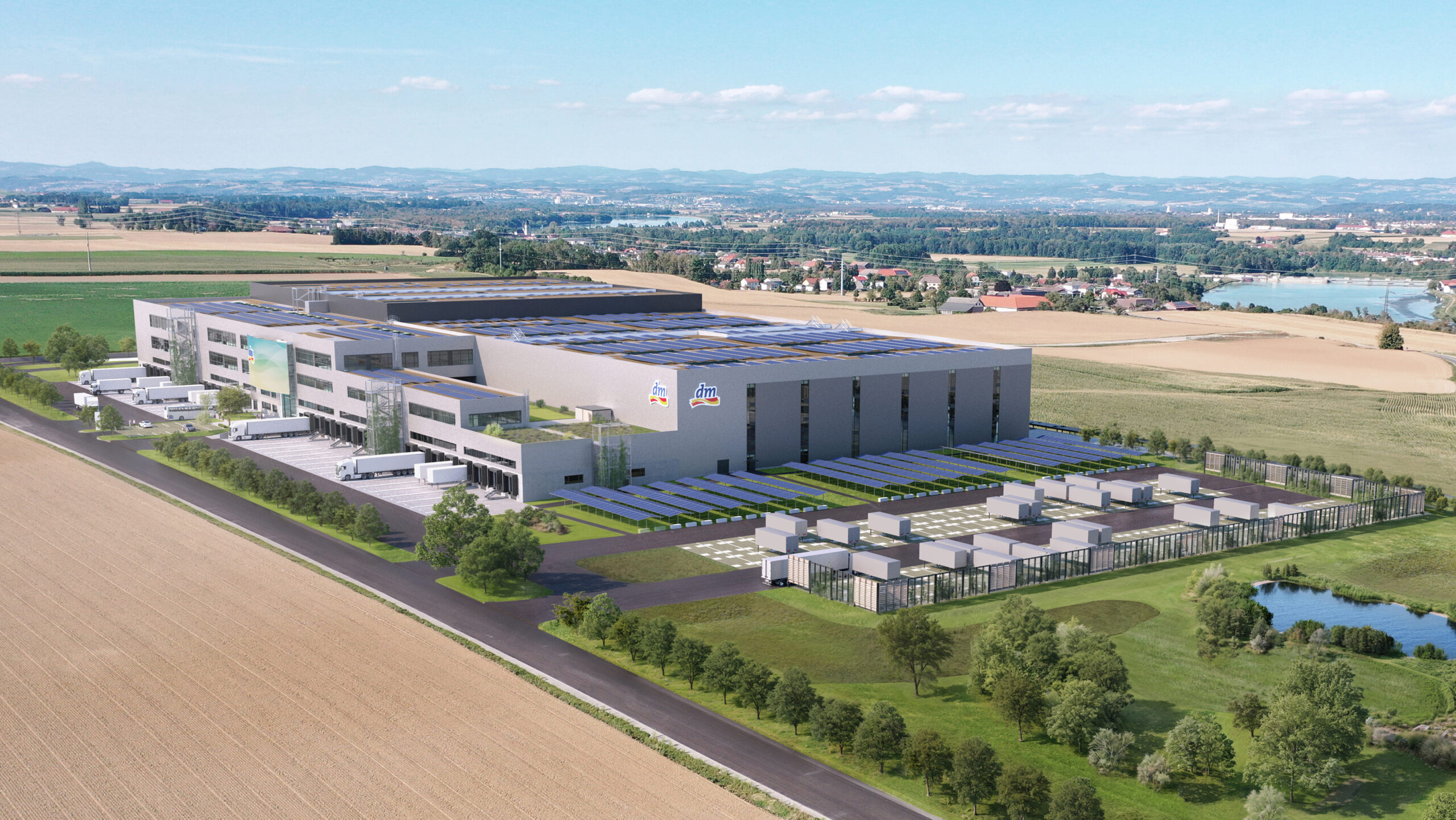
TGW Logistics builds fulfillment center for dm
Feb 23, 2026 at 4:08 PM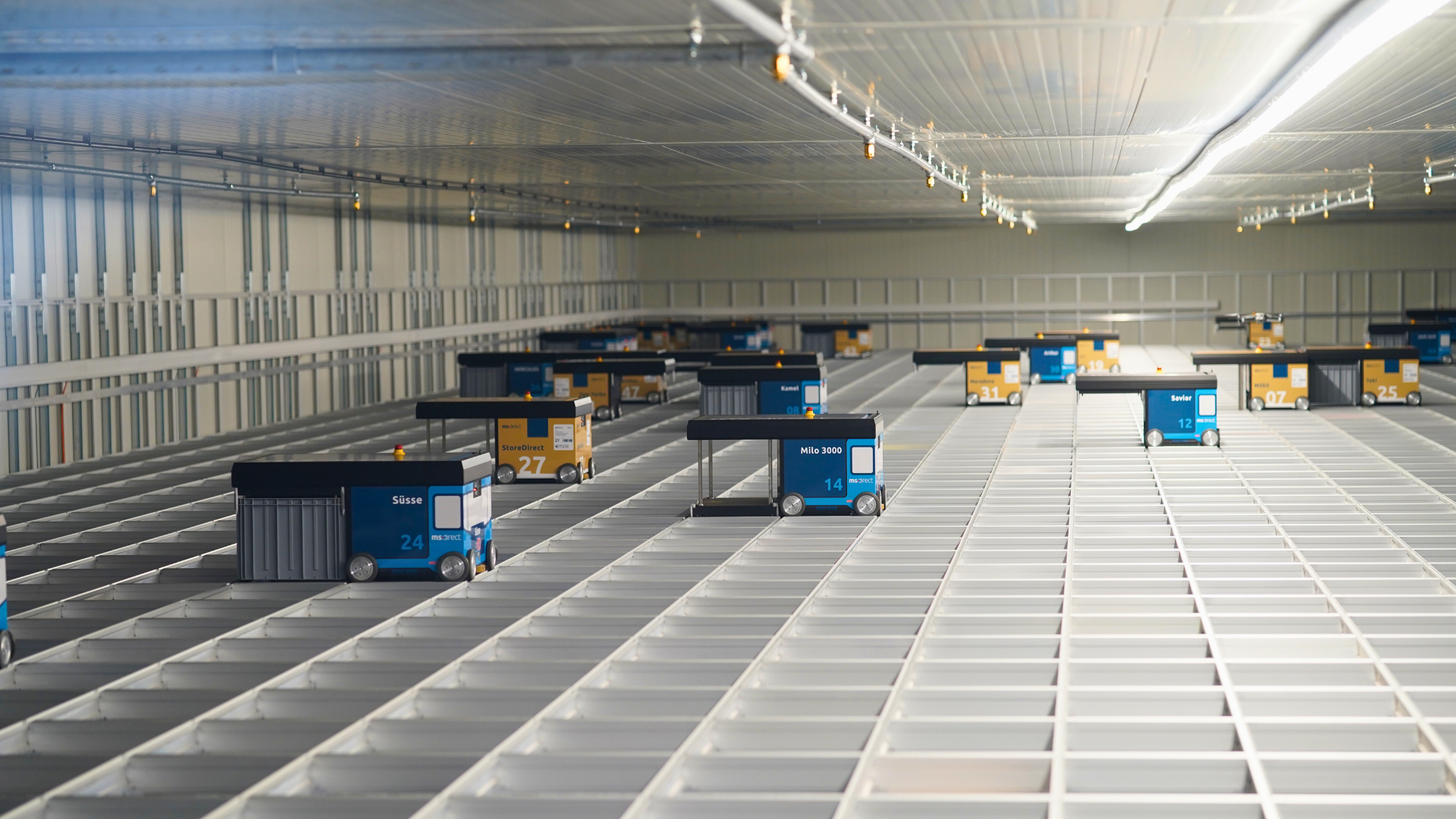
A medium-sized Swiss fulfillment service provider demonstrates how to transform an old industrial site into a state-of-the-art, AI-driven logistics center in a short time. Six months. That’s all MS Direct needed to realize one of the fastest AutoStore projects in Europe. Three months later, the first AI-driven pick robot was in operation.
Six months. That’s all MS Direct needed to realize one of the fastest AutoStore projects in Europe. Three months later, the first AI-driven pick robot was in operation.
Today, just under three years after the start of the transformation, MS Direct processes up to 20,000 orders daily in Arbon. This was made possible through pragmatic approaches, technological expertise, and above all, a highly motivated team.
From Vision to Reality
MS Direct is a leading e-commerce logistics service provider based in Switzerland and Germany. Its portfolio includes smart solutions in the areas of fulfillment and cross-border shipping for online shops. MS Direct handles the complete order processing for online retailers, from warehousing and the pick & pack process to shipping and returns management.
To continuously increase efficiency, better meet customer demands, and further strengthen its position in a highly competitive market, MS Direct focuses on automation and technological expertise. The stated vision: to become a leading tech player in the European e-commerce logistics sector.
After just under three years, MS Direct has already made significant progress toward this goal. By renting space in a 40-year-old industrial site in Arbon—a classic brownfield—the service provider laid the foundation for its technological future.
Actively Shaping Change
The technological transformation at MS Direct is also a response to the multifaceted challenges facing the industry. One challenge is the shortage of skilled workers: According to a 2024 HSG market study, around 80,000 workers will be missing in the Swiss logistics sector by 2032. At the same time, there is intense competitive pressure, where service level agreements and high customer satisfaction have long become essential requirements rather than differentiating features.
In addition, customer demands have increased: According to the 2025 E-Commerce Sentiment Barometer from Swiss Post, 68 percent expect online shipment tracking, 97 percent want an easy-to-understand returns process, and 88 percent expect quick refunds. Next-day delivery is demanded by 38 percent, and same-day delivery by 16 percent.
Regarding sustainability, 72 percent demand less packaging waste. Furthermore, MS Direct has committed to clear climate goals for emission reduction by 2030 as a member of the Science Based Targets Initiative (SBTi).
The biggest challenge for MS Direct itself: the corporate transformation required comprehensive change management. Technology is only as strong as the people driving it forward. Employees were involved early on to establish an innovation-driven culture.
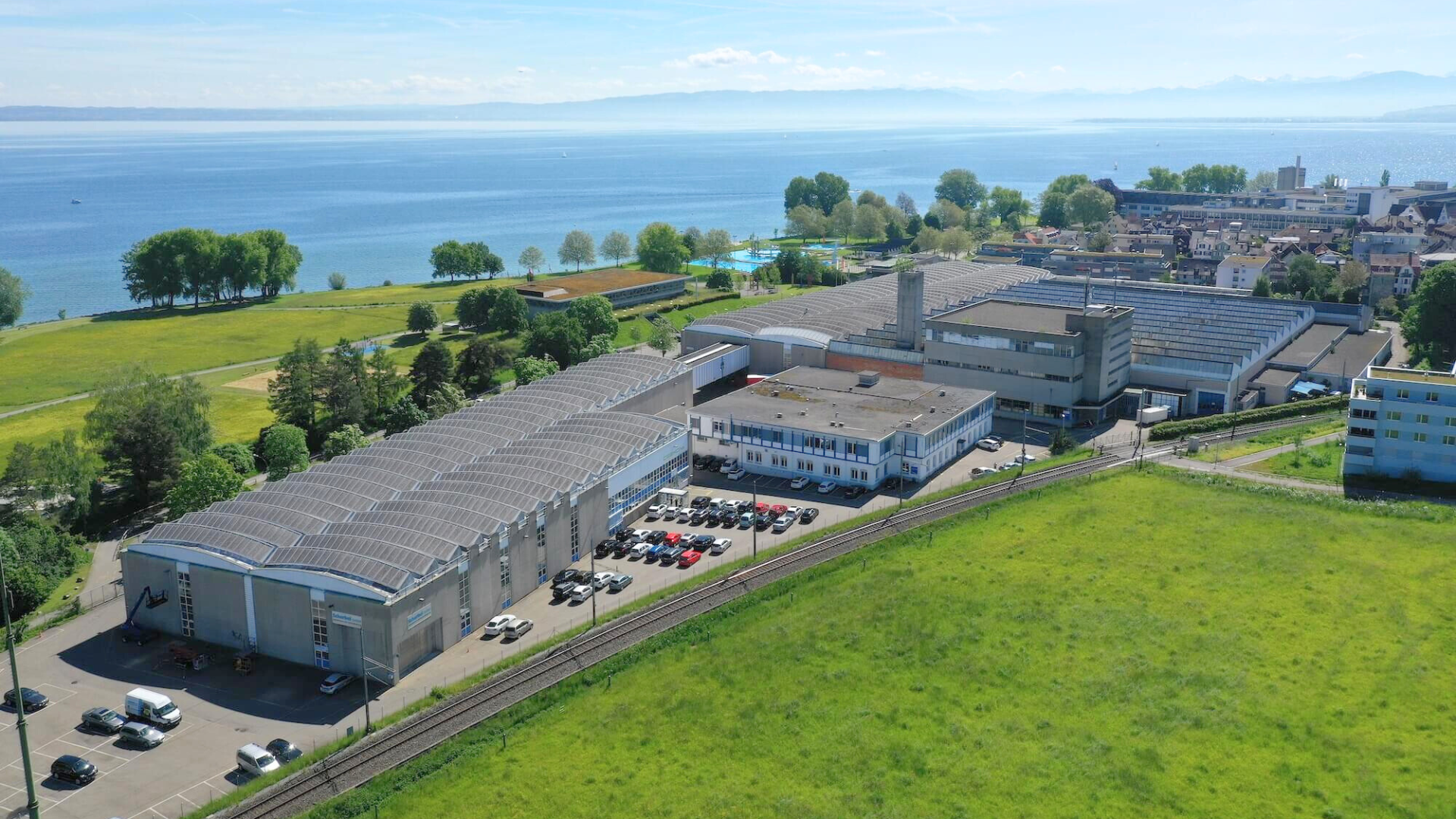
The logistics center of MS Direct in Arbon
Start Small, Learn Quickly, Scale Intentionally
Instead of relying on a rigid master plan, MS Direct adopted an agile approach: start small, learn quickly, scale intentionally. Initially, the company analyzed its own processes to determine where automation could yield the greatest benefits. Focusing on the area with the most potential, MS Direct tested various technologies and gradually automated its processes.
At the same time, MS Direct relies on citizen development for the development of control solutions. The company has its own digital service team that builds proprietary software using low-code solutions. This makes MS Direct independent from expensive software service providers and benefits from maximum agility.
With this approach, MS Direct made rapid progress. Core processes such as warehousing were automated first, followed by adjacent processes like picking, and finally, individual stations were connected with intelligent conveyor technology. All of this is managed in the background by self-developed software.
From Robots to AI: An Integrated Technological Approach
The list of completed projects is impressive. At the center is the AutoStore system implemented in 2023. Here, 79 robots move around 60,000 containers in a highly dense small parts warehouse, enabling four times the capacity in the same space – without requiring lighting, heating, or air conditioning.
In the returns operation, a three-story, 1.4-kilometer-long conveyor system began operation in the same year. This saves handling space and accelerates the processing of returned items.
Just a year later, a fully automated packaging machine was introduced, producing custom cardboard boxes at a rate of up to 600 pieces per hour. The on-demand packaging reduces cardboard material, eliminates the need for filler material, and minimizes transport volumes. This, in turn, leads to a better CO2 balance.
In the fall of 2024, a port of the AutoStore was equipped with an AI-driven pick robot, which is directly integrated into MS Direct’s warehouse management system. Equipped with computer vision and zero-shot learning, the robotic arm can visually recognize items in containers via a camera and grasp them purposefully—without needing prior training. Impressively, the robot achieves up to 2,900 picks daily with a success rate of 98 percent.
This year, MS Direct has also been very active: in the summer, the AutoStore was extensively expanded, doubling its capacity. Recently, a dynamically controlled conveyor system has connected the system directly to the packing stations, and an autonomous mobile robot (AMR) delivers inventory replenishments.
The hardware is complemented by in-house developed digital control instruments and an AI-supported forecasting system that calculates order volumes and goods flows, enabling more precise workforce planning.
Measurable Benefits for All Stakeholders
The investments are paying off. For online shops, the greatest added value is the extended cut-off time. Thanks to shorter processing times, they can now offer their end customers order deadlines until 8:00 PM. Additionally, numerous automations lead to a reduced error rate in picking and optimized shipping by saving on material and postage costs. Thanks to AI-supported forecasts, MS Direct can now also ensure a more stable workforce planning.
End customers also benefit directly: they have longer ordering times and receive their packages the next day. Since less filler material is needed for shipping, this also enhances the unboxing experience—an aspect that is important for three out of four customers.
Innovation is Possible in Medium-Sized Enterprises
How does a medium-sized company finance such a transformation? MS Direct relies on flexible procurement models rather than enormous budgets. Innovative technologies are tested through rental models or pilot projects before significant investments are made. This allows for agile evaluation and targeted scaling.
The iterative approach significantly reduces risk. Instead of putting everything on one card, MS Direct develops automation step by step.
The Next Step
MS Direct continues to operate without a rigid master plan. The focus is on the continuous development of the implemented technologies. An important component is the digital warehouse twin—a digital replica of the warehouse in Arbon. This virtually maps all processes, goods flows, and system interactions, allowing for simulations of different scenarios before they are implemented in reality. The digital twin thus serves as the optimal testing ground for new technologies.
MS Direct also has ambitious plans for its facilities: by 2026, additional AI-driven pick robots will be put into operation, and more AMRs and AGVs will further automate internal goods flows, while AI-based workforce planning will continuously learn. Concurrently, adjacent processes will increasingly be connected through conveyor technology. Last but not least, computer vision will be increasingly used to support core processes.
MS Direct impressively demonstrates that comprehensive logistics automation is not just a privilege of the large. With the right methodology, bold decisions, and a culture that promotes flexibility and learning, medium-sized companies can also make the leap to becoming tech players.
The transformation is thus not only a success story from the Swiss logistics sector but also a model for all those facing similar challenges.