
Kühne+Nagel Plans Acquisition of City Zone Express
Mar 1, 2024 at 7:42 PM
Siemens Energy Relies on TLS SYNCROTESS from INFORM
Mar 5, 2024 at 5:06 PM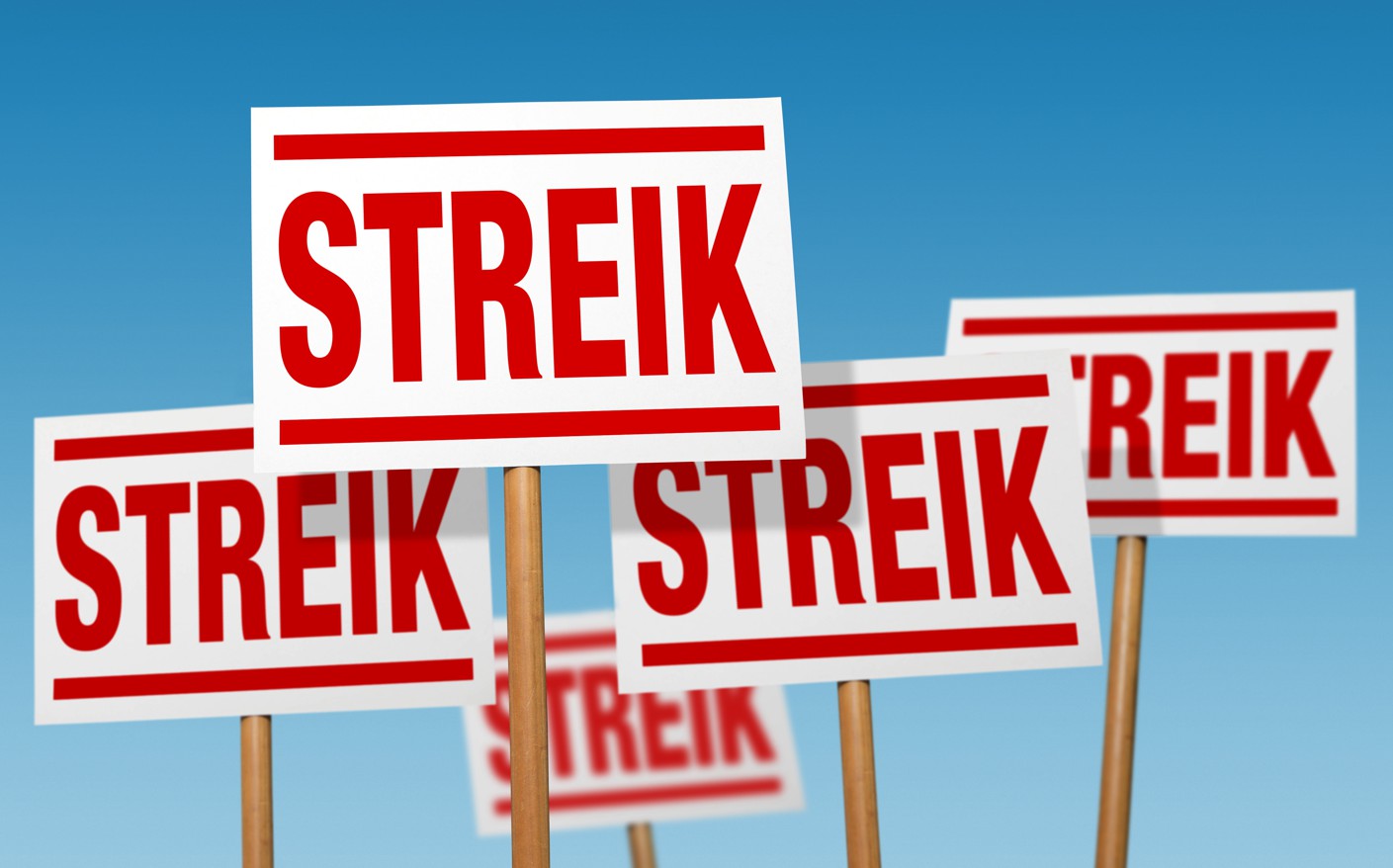
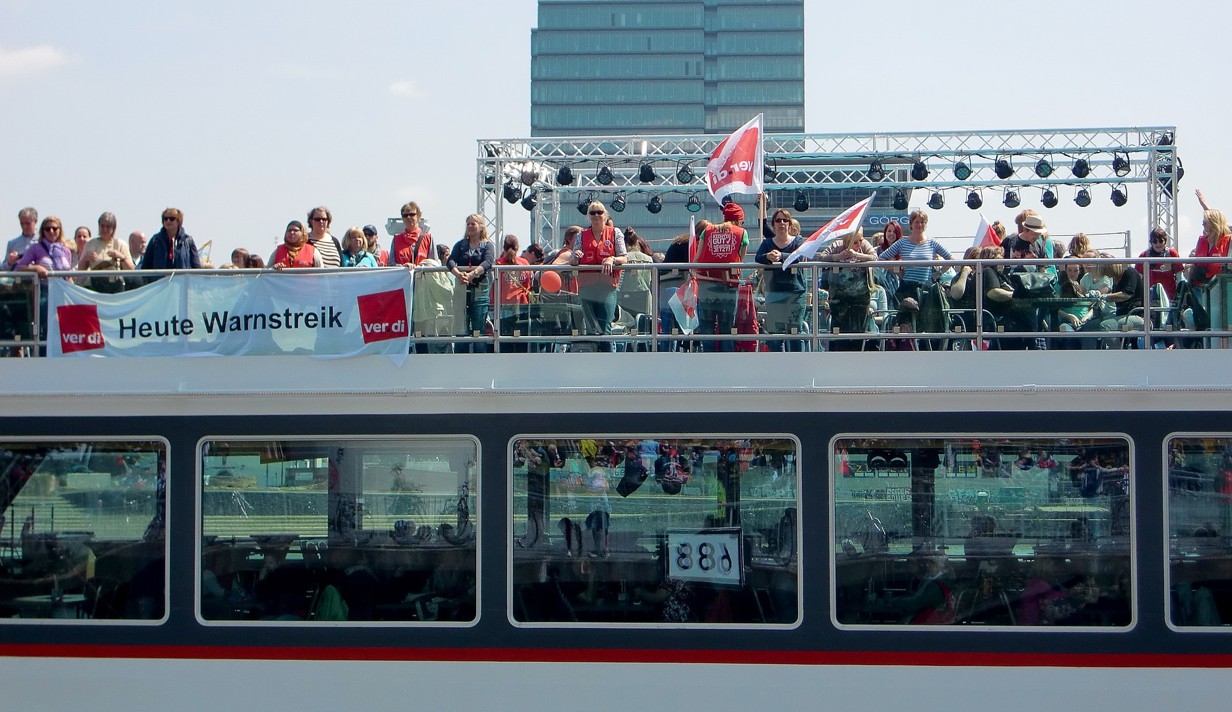
The strikes by the GDL union and its train drivers have severely disrupted rail freight transport in Germany, and just as these strikes are fading, Lufthansa Cargo and thus air freight are being struck. Last year, strikes at HHLA terminals affected sea freight and especially hinterland transport.
Von: Andreas Müller
In the German Federal Constitution, the right to strike is explicitly enshrined (Art. 28). The only two conditions: The strike must affect labor relations (so-called political strikes are not protected under Art. 28 BV); and it must not violate a collectively agreed peace obligation.
The right to strike means that
- The state and authorities are obliged to absolute neutrality. For example, criminal law (such as reports of coercion, breach of the peace, etc.) must not be misused to combat a strike;
- Labor law sanctions (e.g., dismissals) by the employer are prohibited (the suspension of wage payment is not a sanction, but the counterpart to the suspension of work)
Is the right to strike still relevant?
If something is even enshrined in the Federal Constitution, it must have its justification. But in 1949, when it came into force, no one knew how the economy would develop. Everything was in ruins and on the ground, and experiences in dealing with employers and employees were only from the pre-war period. Workers were clearly exploited. Sixteen-hour days for six days a week in the harshest physical labor were completely normal in the Hamburg port at the end of the 1800s and the beginning of the 1900s, for example. There was no talk of hygiene and safety. Thus, the new constitution aimed to protect workers to such an extent that exploitation would no longer be possible.
But today, around 75 years after the Federal Constitution came into force, the right to strike in this form is outdated. Today, it serves unions as a tool of power and primarily union leaders for their personal political profiling. Typically, these leaders belong to a left-wing party. Workers are manipulated masses, as there can no longer be talk of oppression or exploitation.
Huge Economic Damage
The nonsense that these strikes represent is evident in the fact that they cost employers vast sums. They cause enormous economic damage, amounting to hundreds of millions. As MDR reports, the GDL strike alone at Deutsche Bahn caused damage of 100 million euros per day. Of course, passenger transport is included in this. This is irresponsible and is disproportionate to the working conditions of today, even in times of skilled labor shortages, where the cards are more in the hands of the workers. However, this has been different before and can change quickly. Currently, reports of larger layoffs in Germany are increasing. An end is not in sight.
Overall, it is noticeable that strikes on a larger scale mainly occur in sectors or companies that are either directly or indirectly close to the public sector. Workers in secure employment with good conditions often push their limits at the expense of taxpayers.
 Will Autonomous Driving Solve the Problems?
However, workers could also overreach with their demands and push the envelope too far. Autonomous driving is advancing. There are already enormous progress in ports, in container depots, and on the railways. Locomotives are now largely controlled and monitored from a central location. Braking processes are automatically triggered in many cases, etc.
In container depots, port cranes are already operating autonomously in many places, and there are already attempts to control ships from land. Employers still assure that this is primarily intended to alleviate the skilled labor shortage. But at some point, when the limit is reached, this could spread generally.
In other sectors, to offset the costs of labor disputes, either jobs are cut or workplaces are relocated to countries where either wages are much lower and/or strikes are not common, as workers are just happy to have a job at all. Whether this is the right way is debatable, but it is happening.
Unpredictability of Supply Chains
Not only the shelling of cargo ships by Houthi rebels in the Red Sea or accidents and bottlenecks in the Suez or Panama Canal make supply chains more unpredictable and increase logistics costs. No, these strikes are also increasingly becoming a problem for a reliable supply chain, especially with this frequency. While strikes also occur in other European countries, nowhere else, like in Germany, do they also affect other countries. The North-South and East-West axes are interrupted. Due to its geographical location, Germany is the most important transit country in Europe.
It is of no use if production is relocated to Europe to become less dependent on the Far East (China) when deliveries become increasingly unpredictable.
Adjustment is Needed
The right to strike does not need to be removed from the constitution. But new framework conditions must be established. It cannot be that millions of people have to postpone or cancel their trips, whether private or business. It also cannot be that the economy comes to a standstill or at least supply chains are interrupted for days due to a few percentage points of wage.
The parties must reach an agreement at the negotiating table. Demonstrations must take place outside of working hours. The operation of public transport, whether in passenger or freight transport, must be maintained. This is possible in many sectors.
The times of exploitation are over, and thus reasonable solutions are needed. If necessary, judgments from arbitration boards must be accepted. This is not easy and will not fit into the plans of certain political parties. But everyone is affected.
Photos: © Loginfo24 (Adobe Stock/Pixabay)