

Henderson Group optimizes warehouse processes
Mar 24, 2026 at 1:55 PM
Hellmann + Motherson: JV for automotive logistics
Mar 25, 2026 at 10:27 AM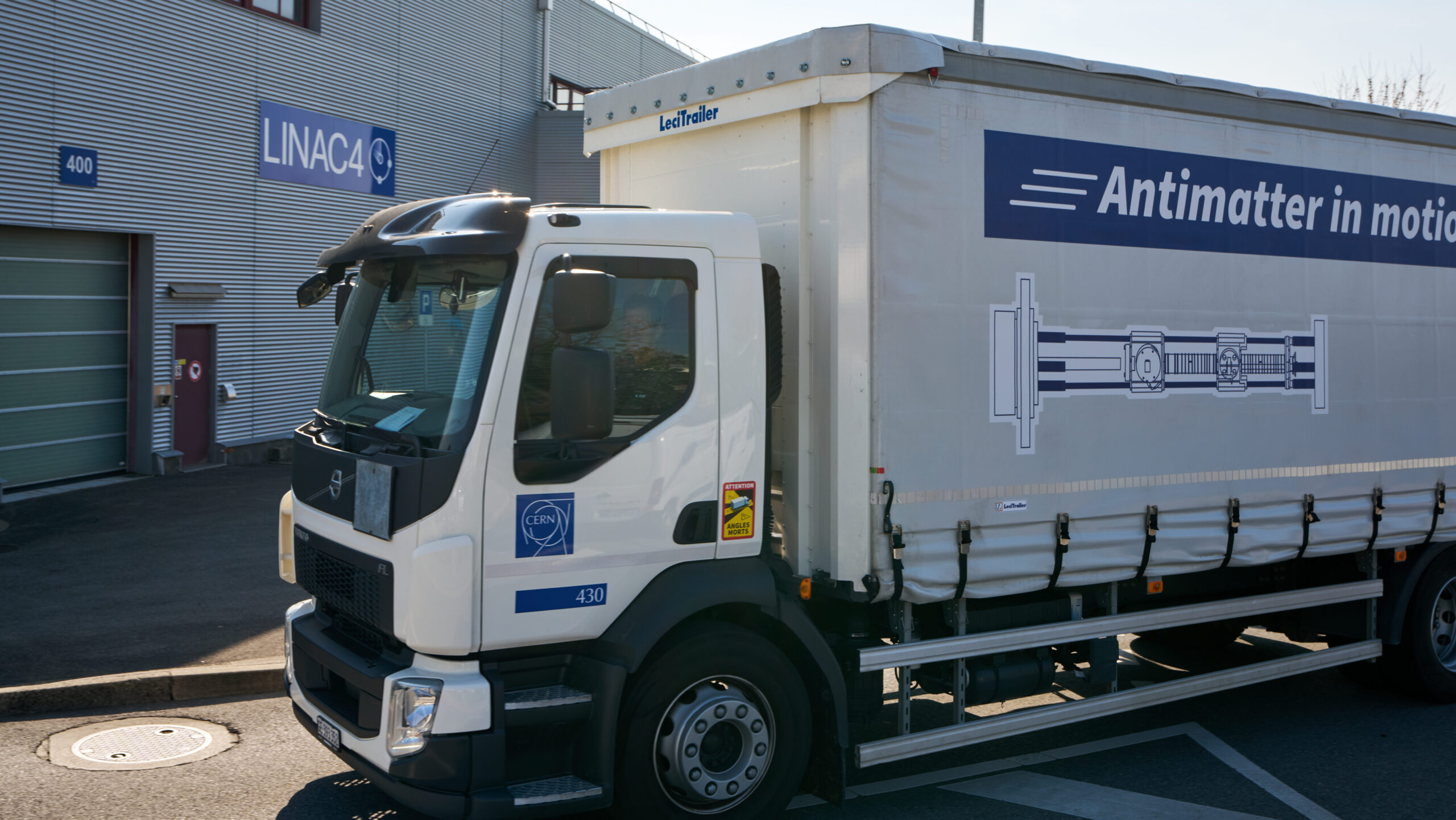
A team of scientists from the BASE experiment at CERN has recently achieved a significant breakthrough in the transport of antimatter. In a unique worldwide experiment, the researchers successfully transported a trap filled with antiprotons across the main site of the laboratory, as the company recently announced. This achievement represents a step towards bringing antimatter to other European research institutions.
The scientists were able to collect a cloud of 92 antiprotons in a portable cryogenic Penning trap. After successfully decoupling from the experimental facility, the trap was loaded onto a truck, and the transport was carried out. Following the transport, the experimental operation could be resumed. According to CERN, this procedure is particularly noteworthy, as antimatter is extremely difficult to store and is immediately annihilated upon contact with normal matter.
The long-term goal of this experiment is to transport antiprotons to European laboratories, such as Heinrich Heine University Düsseldorf, where more precise measurements of the properties of antiprotons will be conducted.
Antimatter is a form of matter that resembles ordinary matter in many ways but has opposite electric charges and magnetic moments. According to the laws of physics, the Big Bang should have theoretically produced equal amounts of matter and antimatter. However, these two types of particles would have quickly annihilated each other, leading to an empty universe. Instead, our universe is predominantly made of matter, which has puzzled scientists for decades. Researchers suspect that there are currently unknown differences that could explain why matter has survived while antimatter has nearly vanished.